Amazon Bedrock announces significant price reductions for OpenAI GPT-5.6 models as part of a broader push for AI accessibility.

The recent adjustment to the Amazon Bedrock pricing structure marks a pivotal moment in the competitive landscape of generative artificial intelligence, as cloud providers race to commoditize large language model (LLM) access. Effective July 30, 2026, Amazon Web Services (AWS) implemented a substantial reduction in on-demand inference costs for OpenAI’s GPT-5.6 model family, specifically targeting the Luna and Terra variants. This strategic move is designed to lower the barrier to entry for enterprises seeking to integrate frontier-class intelligence into their proprietary workflows without incurring prohibitive operational expenditures.
Chronology of the Pricing Adjustment
The decision to adjust pricing comes during a period of rapid iteration within the AI sector. Since the initial integration of OpenAI models into the AWS ecosystem, demand for scalable, low-latency inference has surged. The implementation timeline for these changes was streamlined to ensure immediate impact:
- Initial Integration: AWS incorporated the GPT-5.6 model series into the Bedrock platform earlier this year, positioning it as a cornerstone of their model-agnostic strategy.
- Announcement Date: The official notice of the pricing shift was disseminated through official AWS communication channels in early August 2026.
- Effective Date: The new pricing structure went into effect retroactively as of July 30, 2026.
- Automation of Savings: Notably, AWS engineered this update to be applied automatically to all active accounts, removing the administrative burden from developers and system architects.
Breakdown of Cost Reductions
The economic implications of this announcement are most visible when examining the specific price tiers for the Luna and Terra models. The most significant shift occurs within the GPT-5.6 Luna architecture, which has seen an 80% reduction in on-demand inference costs.
Under the new fiscal structure, Luna is now priced at $0.20 per million input tokens and $1.20 per million output tokens. This aggressive pricing model effectively shifts Luna into a category of affordability previously reserved for smaller, less capable models. Simultaneously, the GPT-5.6 Terra variant, which is typically optimized for high-throughput tasks requiring higher fidelity, has seen a 20% reduction. By lowering the cost of high-capability inference, AWS is attempting to incentivize the migration of complex, multi-stage agentic workflows from legacy systems to the Bedrock platform.
Contextualizing the AWS Strategy
The announcement was shared alongside reflections on the broader technological landscape, highlighting the intersection of industrial robotics, machine learning, and cloud computing. The integration of high-level AI into physical logistics—as evidenced by the advanced automation observed in AWS fulfillment centers—underscores the dual-track nature of the company’s current focus: hardware-level operational efficiency and software-level intelligence distribution.
The "Bring Your Kids to Work Day" initiative, which served as a backdrop for these announcements, serves as a symbolic reminder of the company’s long-term investment in STEM education and the next generation of cloud builders. By fostering an environment where complex systems—ranging from automated sorting robots to sophisticated neural networks—are demystified, AWS aims to maintain its status as the primary platform for industrial-scale innovation.
Market Implications and Industry Impact
The price reduction for OpenAI models on Bedrock has several significant implications for the cloud infrastructure market:
- Commoditization of Frontier Models: As inference costs drop, the "frontier-class" distinction becomes less about the cost of the token and more about the quality of the model’s reasoning and contextual integration. This forces competitors to innovate on latency, privacy, and specialized fine-tuning rather than relying on price-locking strategies.
- Enterprise Adoption Cycles: High inference costs have historically been the primary deterrent for firms looking to deploy LLMs in high-volume production environments. With costs reduced by up to 80%, projects that were previously labeled "proof-of-concept" are now moving into the "production-ready" phase of their development lifecycle.
- The Multi-Cloud Networking Pivot: As AWS continues to push its multicloud networking capabilities, the ability to run cost-effective models becomes a key selling point. Enterprises that manage data across distributed environments now have a more favorable economic case for keeping their primary intelligence layer within the AWS ecosystem.
Supporting Data and Observability
Beyond the headline price cuts, the current push from AWS focuses heavily on observability and data management. As organizations deploy more agents powered by these cost-effective GPT-5.6 models, the complexity of monitoring those agents increases. AWS has been simultaneously rolling out updates to its observability suite, allowing developers to track token consumption, latency, and model accuracy in real-time. This pairing of cost-reduction with granular performance metrics is a tactical response to the "black box" criticism often leveled at generative AI deployments.
Official Stance and Builder Community Engagement
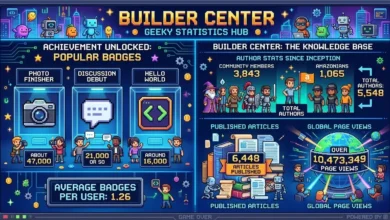
While specific statements from OpenAI regarding the Bedrock pricing were not issued in the immediate wake of the announcement, the partnership remains a critical component of AWS’s strategy to offer a "best-of-breed" model catalog. Through the AWS Builder Center, the company is facilitating a transition where developers can share solutions for optimizing these models. This community-driven approach is essential for scaling AI, as it allows builders to bypass the "trial and error" phase by utilizing pre-configured blueprints for deployment.

The AWS Builder Center currently hosts a variety of technical resources that align with the recent pricing updates, including best practices for token management and strategies for minimizing "hallucination" in cost-efficient inference setups. These resources serve to reassure stakeholders that, despite the lower price point, the reliability and security of the models remain at the standard required for enterprise-grade applications.
Broader Impact: The Future of AI Infrastructure
Looking forward, the shift in pricing is likely to trigger a series of responses across the industry. Major competitors in the cloud space, including Microsoft Azure and Google Cloud Platform, are under increasing pressure to re-evaluate their own model hosting fees. As the cost of compute continues to decline through hardware innovations like AWS’s custom silicon—such as the Trainium and Inferentia chips—the room for further price compression remains significant.
The focus now shifts to the developer experience. With the financial barriers lowered, the next hurdle for mass adoption is integration complexity. AWS has signaled that its upcoming roadmap involves deeper integration between these low-cost models and existing database services like Amazon Aurora and DynamoDB, effectively allowing the AI to act directly on customer data with minimal latency.
In summary, the 80% price reduction for GPT-5.6 Luna and 20% for Terra is not merely a change in line-item costs; it is a fundamental recalibration of the economics of AI deployment. By aligning its pricing with the operational realities of its customers, AWS is reinforcing its position as a central hub for the next phase of the artificial intelligence revolution. As the industry moves from experimentation to widespread, utility-grade implementation, these types of infrastructure optimizations will remain the primary drivers of sustainable growth for both providers and end-users. Future updates to the Bedrock platform are expected to follow a similar pattern, prioritizing the reduction of operational friction to ensure that the most advanced AI tools remain accessible to a growing global developer base.